Showing posts with label England. Show all posts

25 Feb 2016

Bristol (England, United Kingdom)

I've came accross a petition for a new flag of Bristol. Apparently, it's related to Facebook and Twitter accounts. So I became excited about making a design by myself.

Theorically, Bristol council is allowed to fly its banner of arms:


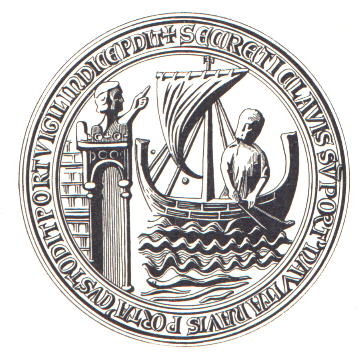
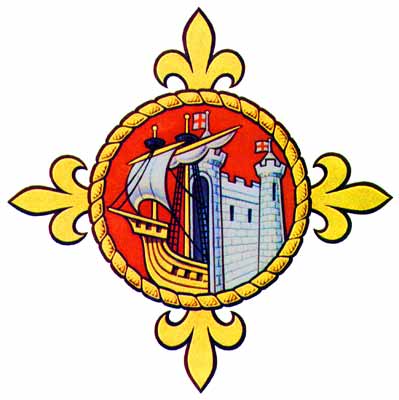
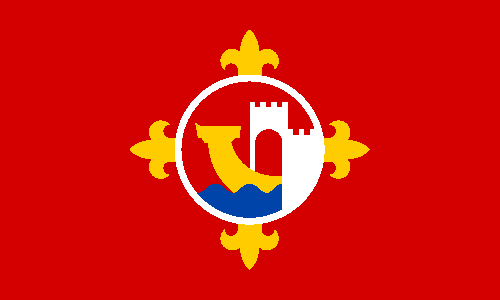
But this banner couldn't be used by Bristolians without authorization. I've become inspired by Bristol's original seal and current badge (diverse from coat of arms, it was used to show allegiance).


Ship and fortified bridge represents the famous Bristol port. The cross fleury is a reference to a compass rose. I think I've simplified enough the complex design to make a good flag, but still keep the elements understandable.

Comments and suggestions are welcome.
Sorry for small delay. I've had a commitment.
Access the campaign's Facebook and Twitter for more ideas.
The banner of arms was made by Paul Callan.

8 Sept 2015

Greenwich (London, UK)

From last August 31st to September 4th, the 26th International Congress of Vexillology happened in Sydney, Australia. The next ICV will happen in 2017, in London, more specifically in the University of Greenwich and the Old Royal Naval College, in the royal borough of Greenwich. So I think designing a flag for Greenwich would be welcome.

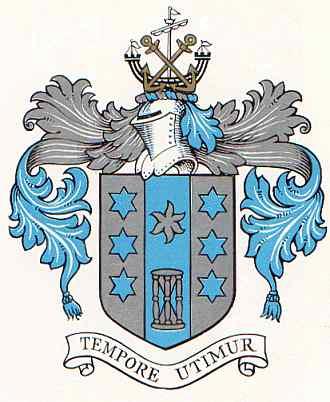
My inspiration for this design was the 1903-1965 coat of arms, before the annexation of Woolwich borough (for this specific purpose, I don't think that references to Woolwich are needed). The first attempt was a simplified version of the banner of arms (i.e. with less stars):

The central stripe is tinier in reference to Prime Meridian, also referred by the hourglass. The stars represent the Royal Observatory.

For my second attempt, I removed one more star, to make the flag look more balanced:

I like the result. But I'm not sure if it's better than with reversed colors:

I have a feeling that this version looks more "natural", but less unique.

Comments and suggestions are welcome.
Which of the three is your favorite proposal for Greenwich flag?

4 Jun 2015

City of Manchester (England, United Kingdom)

The city of Manchester is one of most important in United Kingdom. But, after a quick internet search, I couldn't find any instance of a related flag. So I decided to propose one design by myself.

The city council uses the following coat of arms:

I've found this flag-like image on internet, but it seems to be just a logo:

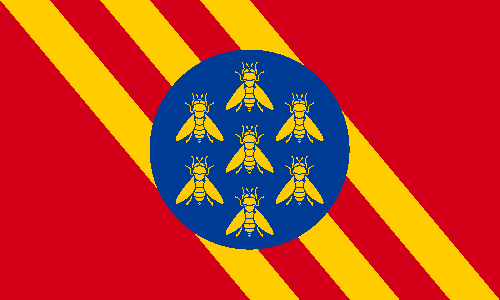
I decided to make a design with the key symbolism of the coat of arms, but with vexillological appeal:

The three diagonal stripes represent the three rivers that cross the city: Irwell, Irk and Medlock. The blue glode represents the role of world-level trade center. The worker bees is commonly used as a Mancunian symbol as the birthplace of Industrial Revolution.

A simplified attempt, with just one worker bee:

One thing that I like in the designs (my favorite is still the first) in the circle incidentally tangential to the thicker diagonal stripe formed by the three thin diagonal stripes and their interspaces.

Comments and suggestions are welcome.
Sorry for the delay in publishing this post.

2 Apr 2015

Birmingham (England, UK)

The flag of Birmingham has its use restricted to official use only, so the Birmingham City Council decided to open a contest for choosing a "community flag", for less restricted use.

This is council's flag:


It's a banner of council's arms, whose symbolism can be better explained here:


Analyzing local heraldry, I found that the most used elements was the bend of lozenges. It would finally become the basis for my proposed flag. The city's coat of arms focuses in Birmingham's importance at industry, arts and learning.

So my first idea for a flag was the following, with a gear for industry, a brush for arts and a feather for education:


But I think it wasn't a very effective design, so I replaced brush and feather for the sun, whose symbolism can be better expressed in my rationale. This was my entry in the contest:


I submitted the following rationale:
The flag is inspired by the original coat of arms of De Birmingham family. The gear represents Birmingham's industry. The sun is the source of light, representing city's importance in Arts and Education, as well as its role in Midlands Enlightenment. The golden diamonds also stand for Jewellery Quarter.
Now it's just hope that any good entry win the contest.

Comments are welcome.
Sorry for the unconventional delay. I had to assure the contest was closed and gone through technical problems.

14 Jan 2015

Liverpool (United Kingdom) [II]

More than two years ago, I proposed a flag for Liverpool. After I found a campaign called "Flag for Liverpool", I decided to have a second look at it.

This is my original design:


The purple color is currently used by the city council. It's a neutral color since it's a mix of the colors of the two main football (soccer) teams: red for Liverpool FC and blue for Everton FC. The white stripe in the hoist represents the River Mersey, an import point of Liverpudlian landscape. The bird is a liver bird, a key symbol of the city, often represented as a cormorant.

My first new design was simply substituting the vertical stripe to wavy stripes, and using a neutral liver bird, since the previous was taken from Liverpool FC logo.


My second new proposal substituted the purple to red and blue, firstly in a arrangement that's also reminiscent of Union Jack.


A variant, with similarities to the city's coat of arms:


I don't know how much a flag with both red and blue can be neutral, but I think the last two designs are very charming.

Comments and suggestions are welcome.
Don't forget to check "Flag for Liverpool" page!

25 Nov 2014

Cambridgeshire (England, United Kingdom)

One of my designs was selected as finalist to the contest for a new Cambridgeshire flag! Today, I'll talk about its creation process and why I think it's an ideal flag for the county.

The contest's rules permitted me to submit two entries. My first, that wasn't selected, is the following:

The blue stripe represents the river Cam and, together with the red stripe placed like a bridge, is a pun on Cambridge name. The three Saxon crowns on red is took from the coat of arms of the Diocese of Ely, and the three crowns on blue are the coat of arms of East Anglia. The yellow background represents the county's fenlands, and keep the recommendation of using a maximum of three colors.

My second design, that I made in a fast but determined way, is a derivative of the first, but with a better realization. That was selected as a finalist:

The symbolism of the former was kept, but with many improvements: the crowns are now three, in a more direct counting; the river gained some life, with the waves, and was colored in a shade near "Cambridge blue", the color of the traditional University of Cambridge. It represents county's landscape, history and prides in a very ellegant way.

Comments are welcome.
You can vote in your favorite design in the end of this page.

9 Apr 2014

Willenhall (England, UK)

I've received an e-mail about a competition to decide new flag of Willenhall, located in the historical county of Staffordshire, now in West Midlands. I've decided not to send a proposal for many logistical reasons, and, in the end, I haven't develop enough my concept.

My inspiration is town's coat of arms:


Based on it, I made this draft:


The top stripe has a Stafford knot, a link to the Staffordshire county. The keys and locks refer to the fact that the town is famous for the fabric of padlocks. Black is added in reference to Black Country. I haven't submitted it because, among other reasons, as I said, I'm not totally satisfied with the design. The keys arrangement is a coincidence to the fact that Willenhall inhabitants used St. Peter's Collegiate Church, Wolverhampton, in the earlier years.

My next step would be, most probably, removing the top stripe, focusing more on the town and less on the county, like this:


Possibly, other changes could occur, like changing lock holes to padlocks. But flag right above is surely an improvement.


If you're reading this line, I invite you to know the six finalist designs and cast your vote on this link (official poll. Although I'm not participating, I'm happy because the judging panel chose six really amazing proposals.

Comments and suggestions are welcome.
My thanks for Philip Tibbetts for inviting me to design a proposal.

11 Feb 2014

Greater London (England, UK)

Some weeks ago, Samuel McKittrick published, on his blog, a post about a flag proposal to the Greater London. What's Greater London? Well, the City of London, officially, is only 2.9 km² large, and, as you can suppose, the area that surrounds the City is much bigger.

His interesting flag proposal is the following, on versions with and without St. Gorge's cross (being the latter a banner of his proposed coat of arms):

The portcullis represents the fact that London is capital of UK (it appears on Westminster coat of arms), as it's a symbol associated with Parliament, and represents the Greater London, for example, on London Regiment cap badge. The lion and the Lancaster and York roses are symbols of England.

His proposals, specially the second, are quite nice, but I was just curious to take a different approach, adding the Saxon crown to represent the status of capital and main town of England since before the Norman Conquest, and appears, for example, on the flag of Middlesex (that comprises good part of Greater London) and many London boroughs, like Barnet, Brent and Ealing.

I decided to make the flag from the coat of arms, making the design have double usage. The coats of arms (only the shields) are here:

The color scheme is inspired by the St. George's red and white. Both shields contain the Saxon crown and the portcullis, whose meanings are explained above. The fess wavy was added because, as Samuel stated, the crown just above the crown could be confused with Parliament logo. It represent the River Thames, that divides London in north and south, and the Port of London attached to it. On the chief of second shield, a St. George's cross, that can represent, among other things, the city of London, charged with Tudor rose, an authentic English symbol. But first shield is still my favorite.

Transposing the coat of arms to a flag:


Maybe a taller ratio would be better, but its unique horizontal pattern (all red, with blue and white wavy stripe) would make it recognizable in any wind condition.

Comments are welcome.
Original Sammy McKittrick post, that's an excellent reading, can be accesses here.

21 Nov 2013

Gloucester (England, UK)

I recently knew about a unofficial campaign to the adoption of a flag to the city of Gloucester. I've sent my proposal to newspaper, hope they'll publish it.

Gloucester don't have a flag. The city council reportedly fly, even if rarely, a white cloth (of 1:2 ratio) with city's coat of arms on center. Even if this flag has official status (I suppose the opposite), its use should be restricted to the council. The newspaper, on other hand, proposes a flag to be flown by the citizens, observing the recent relaxation for the rules about flags on England. The reported flag is something like this:


Based on the coat of arms, my proposal is the following:


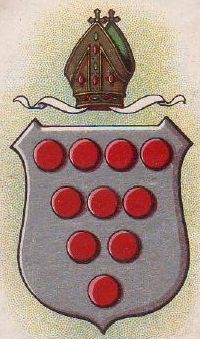
After research, it seems that city's coat of arms is inspired by the arms of De Clare family (that were the original earls of Gloucester), with torteaux (heraldic term for red roundels) believed to come from the arms of the see of Worcester (although a separated diocese of Gloucester exists since 16th century).

My design arranges the three chevronels of De Clare in more traditional way, putting the red torteaux on remaining space (many arms also inspired by diocese of Worcester's also use less torteaux). It's still recognizable, but it's much more adequate to flying on a flag, as it's easier to be hand-made and can better be distinguished on high wind (the council's reported flag could be confused with any other white flag with a coat of arms on it). My design is not copyrighted, and fits the recommendations of British Flag Institute.

Your comments are welcome.
Sorry for the slight delay for posting this week.

23 Sept 2013

County Durham (England, United Kingdom)

Today, it was announced the six finalists to competition that will select the flag of the traditional county of Durham. My entry didn't form the selection of finalists, but I'll post it to spread the word about the competition.

My entry was the following:


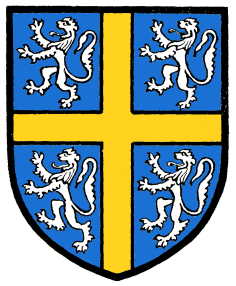
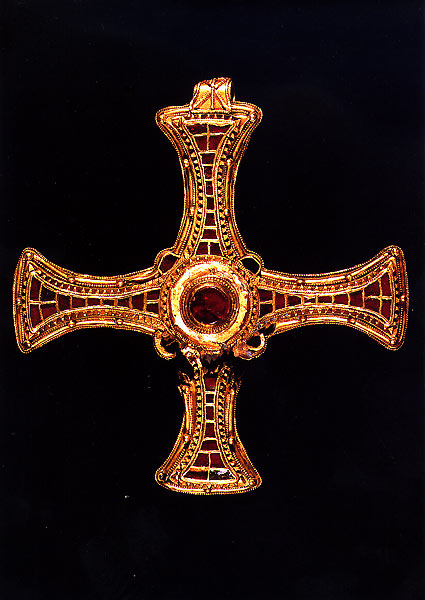
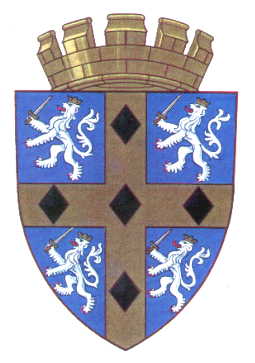
It's based on the coat of arms of the See of Durham. Its relevance is clear: from 13th to 19th centuries, the county was administered as a county palatinate under the figure of the bishop of Durham. The cross was altered to look like the pectoral cross of St. Cuthbert, a local saint of much devotion and historical relevance to the county. The black diamonds (lozenges) were added to the coat of arms granted in 1961, in reference to the famous coal miners of the region; instead of putting four to six big diamonds, I preferred to put twelve smaller ones, to create a more ornamental design. My entry was, actually, an amalgamation between some early designs, that were composed in a layout that I consider aesthetically appealing. Here are some selected drafts:
Draft #1Draft #2Draft #3

Although my design wasn't selected, I'm glad that all the finalist flags have similar themes to the mine.

Comments are greatly welcome.
The official voting is open, and you can access it in the link (bottom of the page).

17 Sept 2013

United Kingdom (without Scotland)

The upcoming referendum about Scottish independence, to be held in 18 September 2014, has generated a doubt about a possible "rest of UK" flag. While many people say the UK flag won't change whatever is the result, we should be aware of the hypothesis of Scottish leaving the Union and the flag of the remaining kingdom being changed; if it occurs, what should be the best option?

My proposal is the following:


In the Yes-winning scenario, the remaining UK should be constituted of England, Wales and Northern Ireland. While the current flag represents the order of the kingdoms joining the Union, the design in the hypothetical could represent all the constituent countries in same way. The yellow cross on black background represents Wales, the red saltire on red stands for Northern Ireland, while the red cross overall represents the England. If Cornwall eventually become a constituent country, part of yellow fimbriation can be turned white. The saltire is completely red, and not counterchanged red and white like in current flag.

At least two other questions about vexillology can be resultant of the hypothetical scenario: the case of the ensigns and the royal standard.

Ensigns: They don't need to be changed. For this occur, it only needs that, while the national flag is changed, the current naval jack is kept. The now-independent countries that still adopt a British ensign (Australia, New Zealand, Fiji, Tuvalu, Cook Islands) can also keep it for historical purposes.

Royal standard: It could be an excellent opportunity to Wales be represented in UK royal standard. However, its inclusion can be ambiguous, as the Prince of Wales uses the "royal" coat of arms of Wales (as used in Wales and in England and Northern Ireland). Other options are quartering England and Northern Ireland, or marshalling them, for example.

As it's a very complex issue, I invite you to leave your opinion on the comments.
This post is about vexillology, not politics. Comment gently, please.

30 Jul 2013

York (England, United Kingdom)

There was occurring a competition to find a new flag to the city of York. Unfortunately, the competition was cancelled after I completed my design. I'll present it now instead of leaving it unknown.

The city council of York has a flag, based on its banner of arms:


But this flag has its use restrict to authorized staff of the city council i.e. it's not a city flag, but a council flag. As the council disagree in releasing it for common use, a new flag is needed. Then I designed this flag:


York is a walled city, with six gates (called "bars"). This flag depict a generic bar under a red background, that represents the heroic history of the city, that include the Siege of York, the Peasant's Revolt and the First War of Scotland Independence. All the bars of York have the city coat of arms in it (see an example), here simplified to a simple St. George cross, that represents the vital importance of the city (what includes the seat of the Primate of England), sometimes claimed by historians as the "second city of England" or "the capital of Northern England".

All comments are welcome.
I don't claim copyright on my York design, so feel free to use it.

9 Apr 2013

West Riding of Yorkshire (United Kingdom)

Do you remember the post about my design competing to be the new flag of North Riding of Yorkshire? I also have a finalist on the competition for the West Riding of Yorkshire.

My original proposal:


Firstly, I'd like to explain the research method I used to aggregate knowledge to my rationale: I used the Wikishire, a Wikipedia-like encyclopedia based on the concept of traditional counties.

I originally used a flower based on the one present on Derbyshire flag. I think the rationale submitted to competition says for itself:
"The flag is divided horizontally in green and white. The superior green stripe represents the agriculture on the north of the riding, while white inferior stripe stands for some of historically most important industries in the south of the riding: the wool industry and the metallurgy This flag pays a tribute to the kingdom of Elmet, a predecessor of the West Riding of Yorkshire. Although Elmet didn't have its own flag, the subtle vertical stripes represent the Kingdom of Northumbria that succeeded Elmet, while green and white (the Welsh colors) can be related to the strong relationship that some historians defend that existed between Gwynedd and Elmet."
The flag that's officially competing was slightly changed by the jury. As far as I know, one of the reasons is that a light gray shade isn't available on many flag shops of England. Additionally, the Derbyshire-inspired rose was replaced by a traditional York rose.

I liked very much the amendment. It's how it looks:


As the flag was drastically changed (including the removal of some details from original design), a new rationale was provided, whose official text is the following:
"The alternating stripes recall the banner of St Oswald and the Kingdom of Northumbria, which is a reference to the territory of Elmet which was a predecessor of the West Riding. The green and yellow recall the colours of the Kingdom of Gwynedd and their alliance to Elmet. The colours also recall the green of the natural wealth and the gold of the industrial wealth. The rose represents Yorkshire."
Don't forget to vote on your favorite design to West Riding of Yorkshire. Click here to vote.
Your comment is always welcome. You don't need to have a Blogger account.
Bonus: click here to see my East Riding of Yorkshire flag that didn't topped the finalists.
The North Riding of Yorkshire flag competition ended. Results are unknown for me.

8 Sept 2012

Liverpool (United Kingdom)

Not many British cities have their own flags. And this week I was verifying this fact, when I decided to create one of them by myself; I chose Liverpool, the third most populous English city, just after London and Birmingham.

I selected two ideal symbols to Liverpool: the Mersey and the Liver bird. The River Mersey is a significant element of Liverpool landmark, and names the region where the city is located: "Merseyside". The liver bird has been a symbol of Liverpool existent for centuries, but only popularly adopted in Modern Times. But what's a Liver bird? Most probably an eagle, possibly a cormorant, sometimes misunderstood as a phoenix or a griffin (read an interesting article about this issue). The polemic is big: the Liverpool City Council  coat of arms uses a cormorant, while the Liverpool Anglican Diocese coat of arms holds an eagle. The Liver bird I used is the most popular form, also seen in Liverpool City Council logo (actually, I used the one in Liverpool FC logo). See it below:


A important point about aforementioned logo is that it's purple, neutral in relation to the colors of biggest football teams of Merseyside: the Liverpool FC red and Everton FC blue. Therefore, purple is the main color in my flag proposal:


The white pale refers to Liverpool position right of River Mersey. The other element of flag, as I said, is the traditional Liver bird.

Do you want to give your opinion about the flag or the post? Leave your comment, please.
Sorry if I didn't post it before, but I had problems uploading the images.