Showing posts with label South America. Show all posts

29 Sept 2016

Buenos Aires Province (Argentina)

Buenos Aires is the biggest and most populous province of Argentina. Since the 1880s Buenos Aires is an autonomous city, and the capital of the province is La Plata.

After a request by reader Bruno Rodolfo, I decided to make a new flag for the province, with more references to provincial history.

This is the current flag:


It was adopted in the 1990s. I think the design has some merits, but the color clash is problematic.

My humble take on this thread is the following:


The diagonal layout remembers the map of the province. The medium blue fields represent the sky — "buenos aires" means "good airs" in Spanish —  and the sea, respectively. The white stripe is not only a nod to Argentinean flag, but a reference to Plata river — "plata" is Spanish for "silver —, fundamental for the development of the province and the whole Argentina. The golden color represents province's wealth, and the red demi-sun is a symbol of federalism and appeared in earlier Buenos Aires flags.

Comments and suggestions are welcome.
Many thanks for reader Bruno Rodolfo, for his valuable theme suggestion.

14 Sept 2016

Paraíba (Brazil)

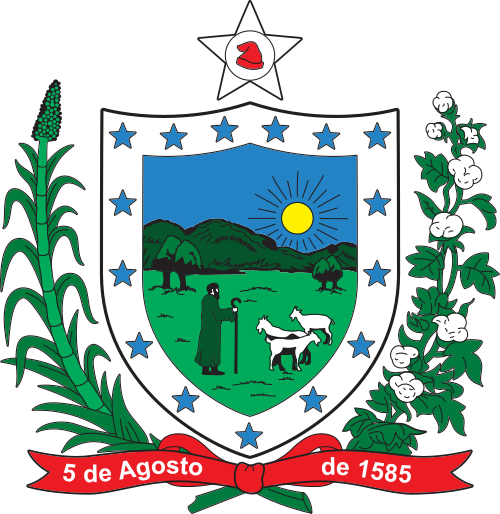
A commenter called Bruno Rodolfo asked about designs for a new Paraíba state flag.

When I had a series for new Brazilian flags, I argued that Paraíba hasn't one of the best flag designs, but I'd keep it for its important link to history. However, this link to history is being strongly desconstructed last years.

This is current Paraíba flag:

It was adopted in 1930 to mourn the murder of João Pessoa, then-governor of Paraíba and running candidate for vice-president of Brazil. For similar reasons, the state capital was also renamed "João Pessoa".

Many argue against the flag currently, because: it represents only negative feelings; the murder had more passional than political reasons; his death was catalyst for a coup d'etat that gave birth to dictatorship.

Some of those favor new designs, but it seems that most of them favor the previous state flag:

The design is certainly lighter. The shield is pointless, especially the text, but it seems to have inspired state coat of arms. My first design was mere simplification of current flag, emphasizing Republican symbolism:

My next design used the colonial arms of Paraíba, often found in the heraldry of the state, on a fancy-shaped shield:

The second design is symmetrical, simple, apolitical and has all the colors of national flag. The coat of arms supposedly contains six sugar breads, representing the historical importance of sugarcane in state economy.

Bonus: a tongue-in-cheek design I once design, just to prove a point. Hint: the text in current flag reads "I DENY" in Portuguese, even though current ortography is identical to a N-word. It wasn't made for serious purposes, but still better than current design.

Comments and suggestions are welcome.
I'd link to thank Bruno Rodolfo for his precious suggestion.

27 Apr 2016

House of Orléans-Braganza

The house of Orléans-Braganza are descendant of princess Isabel, heiress to last Brazilian emperor, and her husband, count of Eu. They are current claimants to the Brazilian (extinct) throne.

The current coat of arms of Orléans-Braganza is that of former Empire of Brazil, with inescutcheon of house of Orléans:


On a previous post, Rodrigo Sales asked me for a remake of this coat of arms. It's the kind of creative exercise I've never done, but nonetheless I'll present two suggestions. I've used "french modern shield", because that's the escutcheon shape historically used by Brazilian nobility.

My first attempt:


It's, basically, a simplification of current coat of arms. I've removed the stars that, apart from being too busy, should be updated every time a new province was created. This design uses the room much better, and diminished the contrast-problematic clash of green and red.

It's better to design a family coat of arms with some usages in mind, like impalement, quartering and lozenge (for ladies).
Impaled
Marshalled
Lozenge

My second attempt is my favorite:


In Brazilian imperial flag, the green represents House of Braganza (emperor Peter I of Brazil), while yellow represents House of Habsburg-Lorraine (empress consort Maria Leopoldina), so it can work as genealogical arms. The inescutcheon of Orléans adds the blue and white, similar to current flag and a homage to Our Lady, patroness of Brazil.

Other usages of coat of arms:
Impaled
Marshalled
Lozenge

That inspired to make this dinastic flag:


Comments are welcome.
This post was a request. Feel free to do your request, too.

16 Feb 2016

Pernambuco (Brazil) [Independent]

Pernambuco is the 7th most populous and the 10th richest state of Brazi. I've been requested to design a set of flags for a hypothetical independent Pernambuco state. But today I'm only showing my solution for national land flag.

This is the current flag of Pernambuco:


It's based in a flag used during a colonial rebellion:


In the original flag, the three stars represent three capitanias (similar to a province) that adhered to rebellion: Pernambuco, Paraíba and Ceará. In current flag, the star represents statehood. The rest of symbolism is very obvious: white for peace, blue for sky, sun for energy and brightness, cross for faith, rainbow for plurality.

As I think the reference to statehood is not suitable for an independent country, I designed a new flag, but with links to the historical flag:


I kept the rest of the symbols. Now without the star, I had to rebalance the flag, so I used the rainbow as a partition line, what would give room for both sun and cross and, as a side effect, fix green-blue contrast issue.

Comments and suggestions are welcome.
This flag was made under request. It's not intended as a political statement.

3 Dec 2015

DROPS: São Paulo (São Paulo, Brazil) [II]

São Paulo is the biggest city of South America. Less importantly, it's the place where I was born and lived since then. The screen of the computer I'm using right now has color issues, so I had to rely on something whose colors I was used; then, I chose re-redesign São Paulo's flag, as I already posted about it here.

This is the current flag of São Paulo:


It's not the most horrible flag in the world, I have to admit, but it's surely a complex design, what's not a good thing when we talk about flags.

The two proposals I made then:


So I was thinking: What if I simplified it, but not as much as my first proposal? Here's the result:


The very same flag, but with a tiny red border around the inner circle:


I made the coat of arms fit in the circle, even though I'm not sure if the shoulder is anatomically correct now. I specially like the proportion of red and white in the flag as a whole.

Even though I think this design appealing, I'm not sure if it's such a big improvement over current flag. But it was funny doing it, and seeing the final result, anyway.

Comments and suggestions are welcome.
If I'm correct, it's blog's 200th post! Thanks for helping it keep alive for such a long time.

16 Sept 2015

Flags of Pernambuco towns: Part I

A Brazilian friend requested flags for cities of Pernambuco state. I've once re-created the flag of its capital, Recife (post here; a candidate for a re-fix, by the way). Today I present the flag of his home city, Nazaré da Mata, and Carpina.

This is the current flag of Nazaré da Mata:


I've thought about keeping the green and white triband, but my final design, after some pencil-on-sketchbook, removed it, but has still some similarity with current flag.


The elements of the flag refer to tourist attractions: the golden obelisk; the sugarcane, referring to historical sugar mills and plantations; the standard, used in a local dance called maracatu.

This is the current flag of Carpina:


The first quarter of coat of arms represent the fact that the city had two former names. The second and third quarters represent the bravery and the Christian faith of founding fathers, respectively; the fourth quarters is punning with city's name, related to carpentry.

My first flag proposal contains an abstract saw:


My second proposal adds the second quarter of coat of arms as a flag canton, but just because one of two city's former name was Floresta dos Leões ("Lions' Forest") .


My third proposal is less orthodox, adding green color due to "forest" part of former name.


With some luck, we'll have a part two and many more!

Comments and suggestions are welcome.
Keep an eye in this series: I promise some great designs.

25 Aug 2015

Fernando de Noronha (Brazil) [II]

To read the original post, click here.

Almost three years ago, I proposed the following flags for the heavenly archipelago of Fernando de Noronha:


For sure, it removed most of the nonsense in current flag (look original post for rationale):


However, I now tend to believe that I could have a more effective proposal. Previous ones had too many colors, and the landscape wasn't effective and, possibly, as relevant as I used to think. My new proposal is the following:


My new design kept the link to current flag as well as Brazilian flag, but is much simpler. I decided to focus on the dolphins, major symbols of the archipelago. The arrangement in circle is classic and catching, and better remarks Brazilian flag.

Comments and suggestions are welcome.
As I'm still without computer, I thought a re-fix is what I could offer.

8 Jul 2015

Misiones Orientales (Brazil)

Misiones Orientales (from Spanish, "Eastern Missions") or Sete Povos das Missões (from Portuguese, "Seven People from Missions") refer to an area in current Brazilian state Rio Grande do Sul that changed hands many times between Portuguese and Spanish empires, often exchanged by Colónia del Sacramento. De facto, though, it was almost-independently ruled by the Society of Jesus until the religious order was expelled from Portuguese Empire, in the 1750s.

As the Portuguese name makes clear, it was constituted by seven different Jesuit "reductions", one of them, São Miguel Arcanjo (St. Michael Archangel), is a World Heritage Site joined by similar sites in Argentina. So I used the number seven in my flag:


This type of cross is, in Brazil, related to the Missões; it seems to be based in the Caravaca cross. The red colors represents the stone bricks used in the historical buildings and the blood shed in Guaraní War. This flag could be used in related museums, archeological sites, etc.

Now, just a side note... During the for-post research, I found a similar flag, but proposed not only by Brazilian reductions, but also neighbor reductions in Argentina, Paraguay and Bolivia, a supposed "Missionary Nation". In my reconstruction:


Comments are welcome.
This blog only has reached 50,000 views! Ooo-hoo!

30 Jun 2015

Region Ica (Peru)

Last December, Region Ica gained an all-new set of flag, coat of arms and anthem. I'm not an expert in anthems and I won't focus on the coat of arms, but the flag is this one:


I honestly like the yellow and purple zig-zags, but the coat of arms is aesthetically bad, and makes the flag way too busy to work properly.

The zig-zag pattern is taken from ancient Paracas culture clothing. Yellow stands for the eternal sun and warmth, White stands for peace, white purple (morado) is the color of the Lord of Luren. Most of the coat of arms repeats themes from the rest of the flag: the Lord of Luren, the candlesticks of Paracas culture, the sun.. the grapes (OK, it's not represented, but the purple would work).

But one omission is the hummingbird from worldwide-famous Nazca Lines, created by ancient Nazca culture and one of main World Heritage sites in Peru. I think this opportunity is too great to be missed:


OK, the changes aren't very radical, but I think the flag works much better now.

Comments and suggestions are welcome.
Is anybody else noticing those dots in recently posted images ? I'm almost sure they didn't exist in original images.

11 Jun 2015

British Overseas Territories (United Kingdom)

Let's take a careful look at Gibraltar's flag:

Why is this different from any other British overseas' flag? Because it don't have an Union Jack on it. Now, look at the flag of the other fifteen British overseas territories:

Akrotiri and DhekeliaAnguillaAscension
BermudaBritish Antarctic TerritoryBritish Indian Ocean Territory
British Virgin IslandsCayman IslandsFalklands Islands
MontserratPitcairnSaint Helena
South Georgia and South
Sandwich Islands
Tristan da CunhaTurks and Caicos

Quite boring, isn't it? So today I'll present my proposal for the fifteen! Some of the designs are mine, others aren't (when noted).

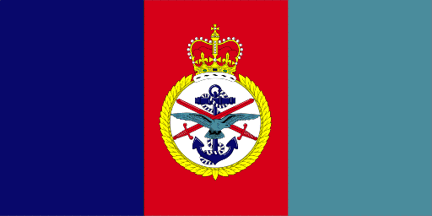
My design for Akroitiri and Dhekelia is inspired by the Dhekelia Garrison's flag. For difference, I've added the colors of British Ministry of Defence, to show it's a military base.


My proposal for Anguilla is actually a rip-off of Republic of Anguilla (1967-1969) flag i.e. a banner of current arms.


For Ascension, a banner of arms, too. I added a tiny white fimbriation in the green chevron, just to increase visibility:


For Bermuda, I picked the lion and red of current flag (both representing British influence) but put the lion's face on a triangle, a reference to famous Bermuda's triangle.


My British Antarctic Territory flag proposal is based on coat of arms, too. I put the blue stripes on center and made the white background shine.


For British Indian Ocean Territory, I picked the flag of Chagossians (natives) in exile and put the palm tree and crown from current design. Some minor details is that I put the crown crossing the tree and centered in black stripe, for better aesthetics. This is one of my favorite flags in the series.


Also original is my flag for the British Virgin Islands. The lamp refers to Saint Ursula and the 11,00 martyred handmaidens that give the islands its name. The four stars represent the four main islands: Tortola, Virgin Gorda, Anegada and Jost Van Dyke.


My proposal for Cayman Islands is a simplification of current coat of arms; this design, actually, was reportedly once used by independentist movement.


My flag for Falkland Island is freely inspired in the coat of arms. I removed the ship and shifted the flag for the hoist for aesthetic reasons.


The flag of Montserrat represent, basically, the island of Ireland (due to physical similarities and the origin of many settlers) and the cross. So I made the following design:


Another of my favorite design on the series is that of Pitcairn. It's, basically, a rotated and simplified version of the coat of arms.


For Saint Helena, I kept the symbol bird of the territory, but added a cross in red and yellow in reference to Byzantine empress Saint Helena, that, according to tradition, found the True Cross.


I rotated and simplified the coat of arms of South Georgia and South Sandwich Islands. Now, the two wavy stars represent both James Cook and the two island chains (South Georgia and South Sandwich) that gives the territory its name.


The flag of Tristan da Cunha is just the striking banner of arms:


Finally, my proposal for Turks and Caicos. I couldn't satisfactorily harmonize the three charges of its coat of arms, so I used yellow for sand, green for the flora, pink for the shell and the flamingoes and a lobster as lone charge.


Comments and suggestions are welcome.
Sorry for the delay; I hope the long post is enough sorry.