29 Sept 2016

Buenos Aires Province (Argentina)

Buenos Aires is the biggest and most populous province of Argentina. Since the 1880s Buenos Aires is an autonomous city, and the capital of the province is La Plata.

After a request by reader Bruno Rodolfo, I decided to make a new flag for the province, with more references to provincial history.

This is the current flag:


It was adopted in the 1990s. I think the design has some merits, but the color clash is problematic.

My humble take on this thread is the following:


The diagonal layout remembers the map of the province. The medium blue fields represent the sky — "buenos aires" means "good airs" in Spanish —  and the sea, respectively. The white stripe is not only a nod to Argentinean flag, but a reference to Plata river — "plata" is Spanish for "silver —, fundamental for the development of the province and the whole Argentina. The golden color represents province's wealth, and the red demi-sun is a symbol of federalism and appeared in earlier Buenos Aires flags.

Comments and suggestions are welcome.
Many thanks for reader Bruno Rodolfo, for his valuable theme suggestion.

14 Sept 2016

Paraíba (Brazil)

A commenter called Bruno Rodolfo asked about designs for a new Paraíba state flag.

When I had a series for new Brazilian flags, I argued that Paraíba hasn't one of the best flag designs, but I'd keep it for its important link to history. However, this link to history is being strongly desconstructed last years.

This is current Paraíba flag:

It was adopted in 1930 to mourn the murder of João Pessoa, then-governor of Paraíba and running candidate for vice-president of Brazil. For similar reasons, the state capital was also renamed "João Pessoa".

Many argue against the flag currently, because: it represents only negative feelings; the murder had more passional than political reasons; his death was catalyst for a coup d'etat that gave birth to dictatorship.

Some of those favor new designs, but it seems that most of them favor the previous state flag:

The design is certainly lighter. The shield is pointless, especially the text, but it seems to have inspired state coat of arms. My first design was mere simplification of current flag, emphasizing Republican symbolism:

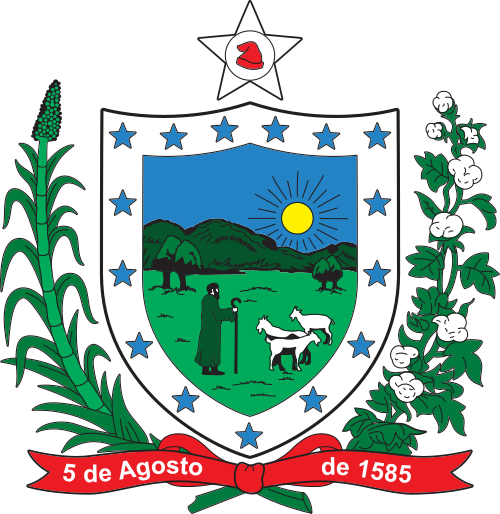
My next design used the colonial arms of Paraíba, often found in the heraldry of the state, on a fancy-shaped shield:

The second design is symmetrical, simple, apolitical and has all the colors of national flag. The coat of arms supposedly contains six sugar breads, representing the historical importance of sugarcane in state economy.

Bonus: a tongue-in-cheek design I once design, just to prove a point. Hint: the text in current flag reads "I DENY" in Portuguese, even though current ortography is identical to a N-word. It wasn't made for serious purposes, but still better than current design.

Comments and suggestions are welcome.
I'd link to thank Bruno Rodolfo for his precious suggestion.

31 Aug 2016

Bryansk Oblast (Russia) [II]

In previous post, I suggested a new flag for Russian oblast of Bryansk. As I said then, I had other ideas, but hadn't my editor available... Now I have!

This is the current Bryansk flag:


And this was my first proposal:


The idea I was then brewing is the following:


As you can see, it has many elements in common with both current flag and previous proposal, but I think this one is much better thought.

The yellow pall divides the flag in three parts. Top blue, bottom blue and burgundy parts represent, respectively, Belarus, Ukraine and Bryansk, like a moderately accurate representation of their geographical locations. Blue color represents Slavic union. Bryansk territory is represented by the burgundy color, from the troops that liberated the oblast during WW2, and the golden spruce, representing local flora.

I guess this flag captures well Bryansk's location and landscape.

Comments and suggests are much welcome.
I am curious: which one do you prefer, first or second proposal?

24 Aug 2016

Bryansk Oblast (Russia)

Bryansk is a Russian oblast bordering Ukraine and Belarus.

Its flag, with clear Soviet look, is the following:


The burgundy background represents the color of the banners Red Army and guerrilla fighters carried during Bryansk liberation during WW2.

The shield is divided in three parts, representing the triple border, while blue represents Slavic unity. The shield contains a smaller shield, of Bryansk city, capital of the oblast.

This flag is boring an busy. I decided remix it on a more appealing way:


The flag is more paisagistic. The three spruces represent Russia, Ukraine and Belarus.

It's just a thought. There are many other ways of recombining the elements, and I'd show some if I had my editor available.

Comments and suggestions are welcome.
More ideas for Bryansk oblast flag? Show me on comments, please.

29 Jul 2016

Buffalo (NY, USA)

Buffalo is the second largest city of New York state, just after NYC. I think Buffalo flag is almost nice, but I think the seal just ruin it:


I think the basic pattern is very interesting, specially for a 1920s flag. The bolts represent the city as "City of Light", due to its early widespread adoption of electric lighting. The seal shows city's harbor — very generic, actually.

After looking a bit for city's symbols, I think I found a winner: buffalo, the animal. Yes, the American bison, not related to African or water buffalos. A bison appears in University at Buffalo's coat of arms as such, for example. Here's the result:


I considered using a brown buffalo, but decided for adopting strictly the original flag scheme. I think the result is amazing, and a much better contender among American best city flags.

Comments and suggestions are welcome.
I'm very sorry by absence last week.
The buffalo design is based on "Buffalo Embassy Project", by Mike Wozniak.
By the way, do Buffalo buffalo Buffalo buffalo buffalo buffalo Buffalo buffalo?

14 Jul 2016

Bangkok (Thailand)

Bangkok is the capital and most populous city of Thailand.

It's flag looks more or less like that:


The flag shows city's seal, consisting of Hindu god Indra riding Erawan (or Airavata), his three-headed white elephant, above the clouds. The seal itself is based in a drawing by Siamese prince Naris (1863-1947).

The seal itself looks good. However, something as complicate as that has no place in a flag. Indra himself is usually depicted in very complex ways, so I decided just for Erawan, on a green background.


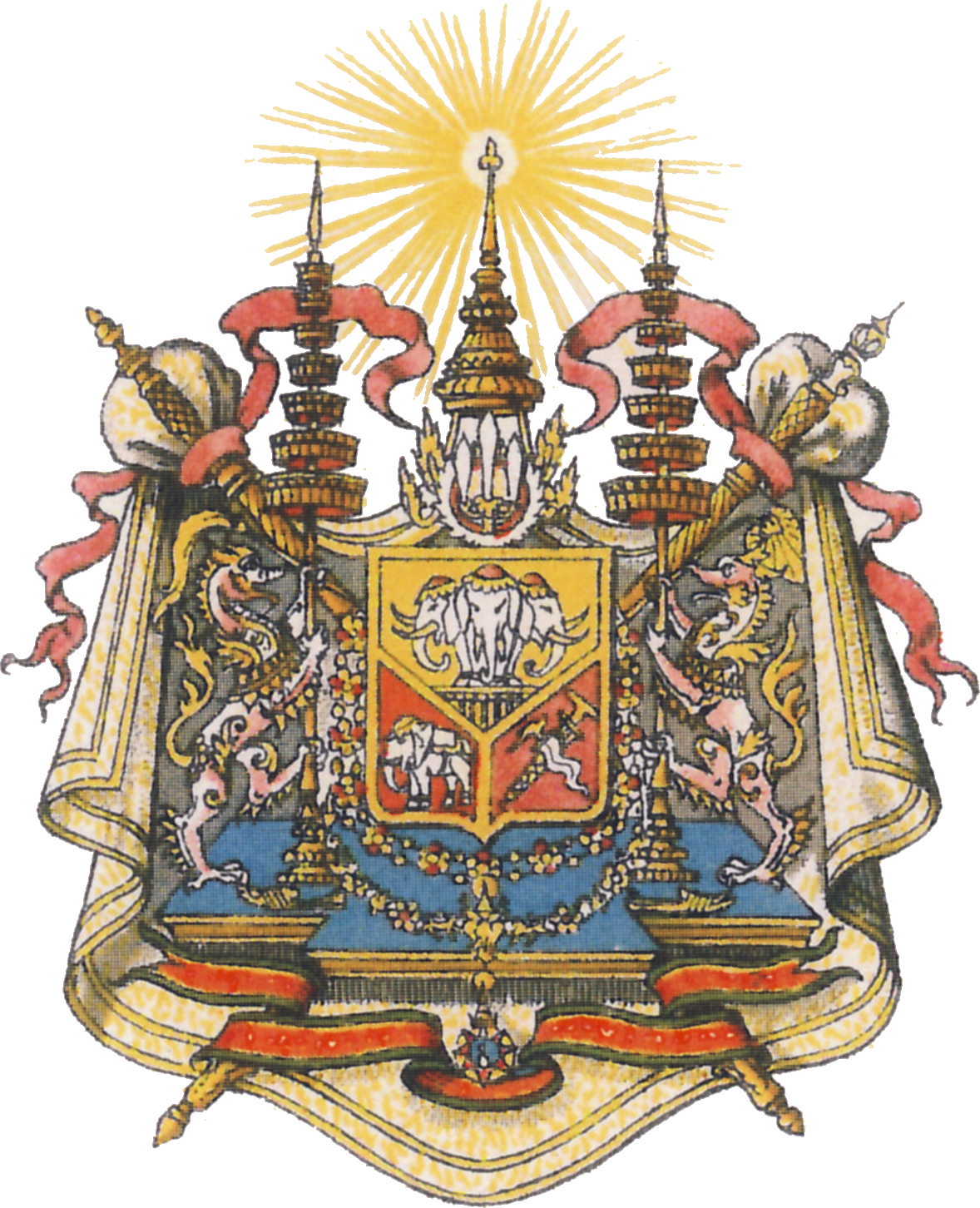
Erawan is more often associated with Laos, but it's also very significant on Thai monarchy symbolism, being even present in royal coat of arms from 1873 to 1910.

I'm not sure if it's too synthetic, but I think it's very elegant.

Comments and suggestions are always very welcome.
I'm not expert in Hindu mythology. If I made some mistake, please correct me in comments area.

8 Jul 2016

Hacker culture

The "hacker culture" is a subculture that emerged in 1950-60s among computing academia. Nonetheless, the word "hacker" is negatively associated in media with the "black hat crackers" (in hacker slang), usually seen as against true "hacker" spirit.

As a computing major, I was always interested by the hacker ethic. Searches for "hacker flag" will only return pirate or Anonymous flags, that, in my humble opinion, doesn't embrace the whole hacker culture.

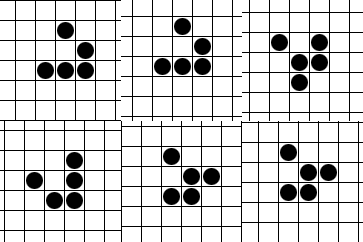
So I decided to make a flag by my own. Unfortunately, my flag is not a "hack", but a repurposing of Eric Raymond's proposal for a hacker emblem: the "glider", an interesting pattern often found in Conway's Game of Life.


From now, I'm sorry if that all that's Greek to somebody. Flag is coming next!

Based in that proposal, I designed the following flag:


I've rotated the table, making a cleverer use of space, in my opinion. I've chosen an exclusively black and white pattern not just for chromatic minimalism, but also because it's nearer "glider's" most common representation, and permits many different associations: 0s and 1s, black and white hats, the often-seen link with anarchism, and probably many more.

Said that, variations could be made replacing background colors, or even using a national or rainbow flag as background.

I've tried different rotations and common representations of the "glider" pattern,but I guess it's by far my favorite.

Comments and suggestions are welcome.
Any corrections or clearance in hacker culture is also very welcome.